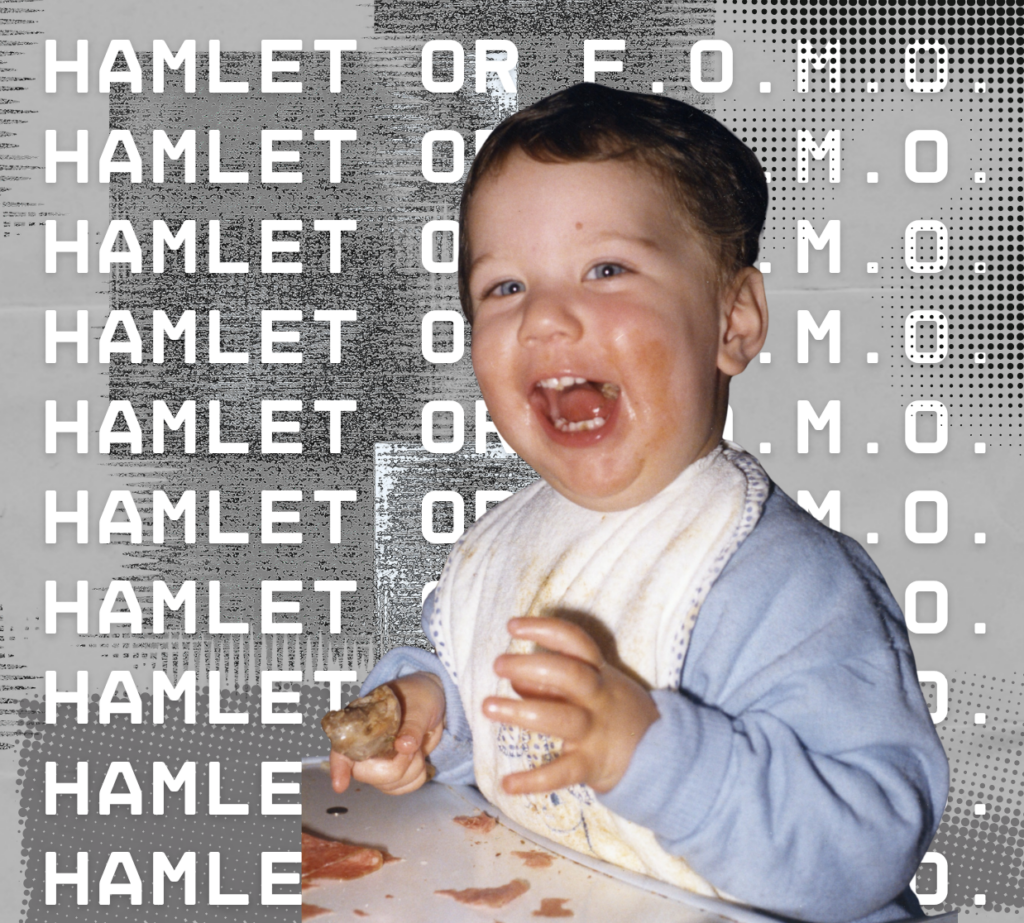
HAMLET OR F.O.M.O.
You’ll miss something.
You always will.
That’s the price
of being alive.
Breathe!
I am not
The Prince Hamlet.
and this is
my love song for you.
– Filippo.
ENG: Filippo sings Oh com’è triste il mar, an ancient folk song from the Marche region, the Italian land where his roots lie. It is a fragment of that heritage of orally transmitted melodies that travel across generations, preserving the hidden, emotional memory of a community. The song is often performed together with other traditional stornelli, as in this case with La Canna, a lullaby — the “reverend mother of all songs,” as Lorca called it.
“Come with me and sing my song” becomes an invitation to cross the stormy sea together, to navigate solitude, to move through pain. Like a lullaby, it brings us back to a dimension of connection that accompanies us into the solitude of sleep: a space in which the child possesses a poetic freedom to create mysterious associations between images, and to move through abandonment through the power of the voice.
ITA: Filippo canta Oh com’è triste il mar: un antico canto della tradizione popolare marchigiana, la regione italiana in cui si trovano le sue radici. É un frammento di quel patrimonio di melodie trasmesse oralmente che attraversano le generazioni e conservano la memoria sotterranea ed emotiva della collettività. Il brano viene spesso eseguito insieme ad altri stornelli tradizionali, come in questo caso La Canna, una ninna nanna, “madre reverenda di tutte le canzoni” (cit. Lorca).
«Vieni con me a cantar la mia canzone» è l’invito ad attraversare insieme il mare in tempesta, navigare la solitudine, attraversare il dolore. Come una ninna nanna ci riporta in una dimensione della relazione che accompagna alla solitudine del sonno uno spazio in cui il bambino possiede una capacità poetica libera di stabilire associazioni misteriose tra immagini e di attraversare l’abbandono con il potere della voce.
SLO: Filippo poje Oh com’è triste il mar, starodavno ljudsko pesem iz dežele Marke, italijanske pokrajine, kjer so njegove korenine. Je drobec dediščine ustno prenašanih melodij, ki prehajajo iz generacije v generacijo ter ohranjajo skriti in čustveni spomin skupnosti. Pesem se pogosto izvaja skupaj z drugimi tradicionalnimi stornelli, kot v tem primeru z La Canna, uspavanko – »častitljivo materjo vseh pesmi«, kot jo je poimenoval Lorca.
»Pridi z menoj in zapoj mojo pesem« postane povabilo, da skupaj prečkamo razburkano morje, plujemo skozi samoto in prečkamo bolečino. Tako kot uspavanka nas vrača v razsežnost odnosa, ki nas spremlja v samoto spanja: v prostor, kjer otrok premore poetično svobodo, da ustvarja skrivnostne povezave med podobami ter se skozi izkušnjo zapuščenosti prebija z močjo glasu.
„Komm mit mir und sing mein Lied“ wird zu einer Einladung, gemeinsam das stürmische Meer zu überqueren, durch die Einsamkeit zu navigieren und den Schmerz zu durchqueren. Wie ein Wiegenlied führt es uns zurück in eine Dimension der Verbundenheit, die uns in die Einsamkeit des Schlafes begleitet: einen Raum, in dem das Kind die poetische Freiheit besitzt, geheimnisvolle Verbindungen zwischen Bildern zu schaffen und durch die Kraft der Stimme die Erfahrung des Verlassenseins zu durchqueren.